01.16.26
By Lisa Major

The pillars of experiential marketing are tried and true: focus on the consumer, stay true to your brand and its values, and find relevance in the intersection between the two. Trends come into play in the creative ideas and tactical executions that find new ways to surprise and delight audiences and form deeper brand connections. In 2026, the evolution of experiential marketing will continue with more immersive and data-driven experiences, plus new technologies and cultural shifts fueling consumer expectations.
With the pandemic solidly in the rear-view mirror, the hybrid model of live and virtual experiences has hit full maturity. The learnings and impact from that period are still in play: digital or virtual elements of marketing programs effectively increase reach and scale, economic pressures require measurable ROI and business impact, and experiential activations are a core component of brand strategies, no longer campaign add-ons. The need for strategic planning and execution is as important as ever, and new trends in experiential marketing are driving the industry forward.
Audiences today want experiences that are tailored-made for them. And while experiential marketing programs are often built to cater to many, the power of AI technologies enables marketers to create micro-segments within the larger effort and personalize experiences in real-time to those smaller groups. Look for ways to create dynamic content and modular experiences that can be customized to attendee behavior at your event.
Hybrid models necessary during the pandemic have been repurposed to extend and expand the impact of a single event. Now, and expected in 2026, brands are employing a cohesive mix of physical events, digital activations, and virtual immersions to bring a multifaceted experience together for consumers. This model will accomplish several goals: deepening engagement, increasing participation, and actualizing post-event value.
Brands are beginning to understand that if they can be a catalyst for community building, consumers will inherently feel stronger brand loyalty because of the role they played in making new connections. A big trend for 2026 will be leaning into this strategy, where the focus is on bringing audiences together for a shared and customer-driven purpose, shifting from one-off brand activations. And in the spirit of a customer-driven strategy, brands will invite audiences to help create the experiences and subsequent content themselves. This goes a step further than influencer and sponsored content, where brand parameters rule. By allowing consumers to build the community and experiences they find most valuable, brands will learn much more about what drives better engagement, connection, and loyalty.
As Gen Z’s purchasing power and influence increase, brands are aligning with their preferences, values, and behaviors. Therefore, a key trend in experiential marketing is incorporating sustainability efforts, showing that activations, events, or immersions consider their social and environmental impact. And, with a renewed focus on purpose-driven marketing in 2026, brand activations are predicted to align with their consumer’s wellness goals and intentions for positive growth over excess and uncertainty.
Brands will be leveraging new experiential tech in the new year, all with the goal of making the entire experience feel simple and seamless. Smart wearable tech, frictionless payments, data transfer, or digital concierge experiences are all examples. The purpose is to design tech integrations to enhance – not overwhelm or replace – the human experience.
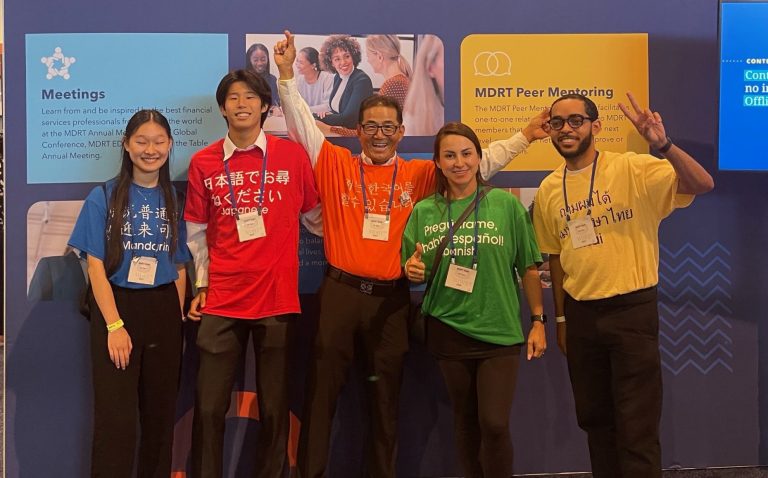
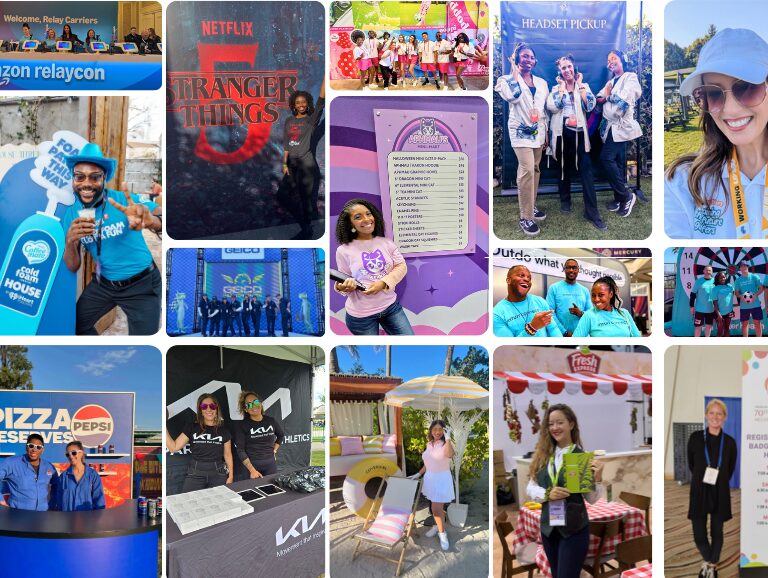
The trends listed here all rely on the most important component of an experiential execution to be successful: people. Personalization, wellness-oriented, and community-centric strategies all need talented brand ambassadors to act almost as “experience designers.” Brand ambassadors are increasingly expected to serve as facilitators of the experience rather than task-based executors. This means understanding the brand story, adapting interactions in real time, and gathering valuable insights from attendee conversations. As technology automates logistics, the human element becomes the differentiator, making training, preparation, and emotional intelligence components of experiential success.
If the first half of this decade has taught us anything, it is that anything can happen. Brands are considering this in their planning by designing experiences that can quickly adapt to disruption or change. One way to achieve this is by planning modular components of an experiential campaign that are cohesive as a whole and still successful when scaled down. This strategy is smart to prepare for all contingencies, including weather, local regulations, audience turnout, and cultural impact.
In 2026, brands will be refining how success is defined and measured. The focus will shift from surface-level metrics like impressions and attendance to indicators like dwell time, engagement quality, lead relevance, and post-event behavior. By designing experiences with measurement in mind from the get-go, brands can better connect experiential touchpoints to business outcomes and long-term value.
The future of experiential marketing is immersive, human-centered, and intentional. As such, brands are building long-term experiential ecosystems rather than a campaign of individual events or activations. The competitive edge comes through consistency, continuous optimization, and staying focused on the consumer need in your delivery. Trend-watching is all about staying in tune with the evolution of the industry and looking for opportunities to lead the charge.
As experiential marketing continues to evolve, having the right partners in place matters more than ever. ATN brings decades of experience, a nationwide network of top-tier event staff and brand ambassadors, and a hands-on approach to client services and execution that helps brands turn strategy into standout experiences. If you’re planning for 2026 and beyond, let’s talk about how ATN can support your experiential goals.
Get the latest and greatest in experiential marketing news delivered to your inbox!